This webinar investigates the known risks that lurk within Flexible Endoscopes. Are we doing all we can to eradicate the problems within? It looks at incidents across the world and discusses whether we can remove some of the obstacles that are preventing changes to reprocessing of flexible endoscopes.
Can modify the decontamination life cycle to ensure endoscopes are decontaminated to a more assured level? This includes the practicalities of sterilization.
We know that residual fluid remains within the endoscope post processing, and the webinar looks at various ways of reducing the probability of such moisture creating communities of micro-organisms that are more commonly known as biofilms.
What are the obstacles we need to remove or change and is there a culture problem, or with decontamination systems or actual device design?
The webinar discusses how we develop a strategic evolution to meet modern infection control challenges.
Examples of infection transmission from across the world. Should there be a hierarchy of risk for flexible endoscopes and a discussion whether traditional interpretation is still relevant to risks that exist.
Are we doing enough to prevent biofilm and can systems be enhanced to eradicate the possibility of biofilm taking hold?

Issues such as biofilm are discussed constantly, are we doing enough to implement change? We have the knowledge and awareness of the problem, but why do we not innovate to prevent? Why can’t we achieve ‘Utopia’?
Technology is in development, but will we accept or resist?

The current life cycle of a flexible endoscope, from patient to reprocessing and back to patient, was not originally designed to account for today’s awareness of biofilm and antimicrobial resistance. Can we rethink the life cycle, to include all the multiple factors to ensure a safe flexible endoscope is prepared for the next patient?

The benefits of moving towards sterilization of endoscopes, the systems available and positives and negatives that exist.
Sterilization of endoscopes is necessary for scopes for use on higher risk patients and where we penetrate sterile fields.
Are there other contributory transmission factors that contradict the suggestion that sterilization is necessary? Or are we accepting imperfection?
This is the fifth webinar dedicated to “Why do we accept “Imperfection” when “Utopia” is possible?”, presented by ASP Continuous Education.
26 November 2025
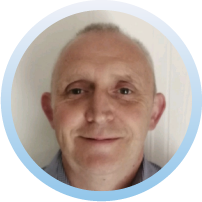
Authorised Engineer (Decontamination)
Principal Decontamination Engineer – NHS Wales Shared Services Partnership Specialist Estates Services
- Member Institute of Healthcare Engineering and Estates Manager (UK)
- Chartered Member Institute of Decontamination Sciences (UK)
- Chairperson – Central Sterilising Club (2024 – 2027)
- Interim Chairperson – Board of AE(D) Registration – IHEEM
- IHEEM Registered Authorised Engineer (Decontamination)


Do we understand the true risk and the correct ratio of infections because of decontamination activities not being completed correctly?
- Risks are well known, why are we accepting imperfection.
- We cannot eradicate biofilm, but we can control and minimize.
- Cycle reconfiguration is necessary for reprocessing Flexible Endoscopes.
- Utopia is possible, we just need to evolve, resource and adapt to new methods and systems.